
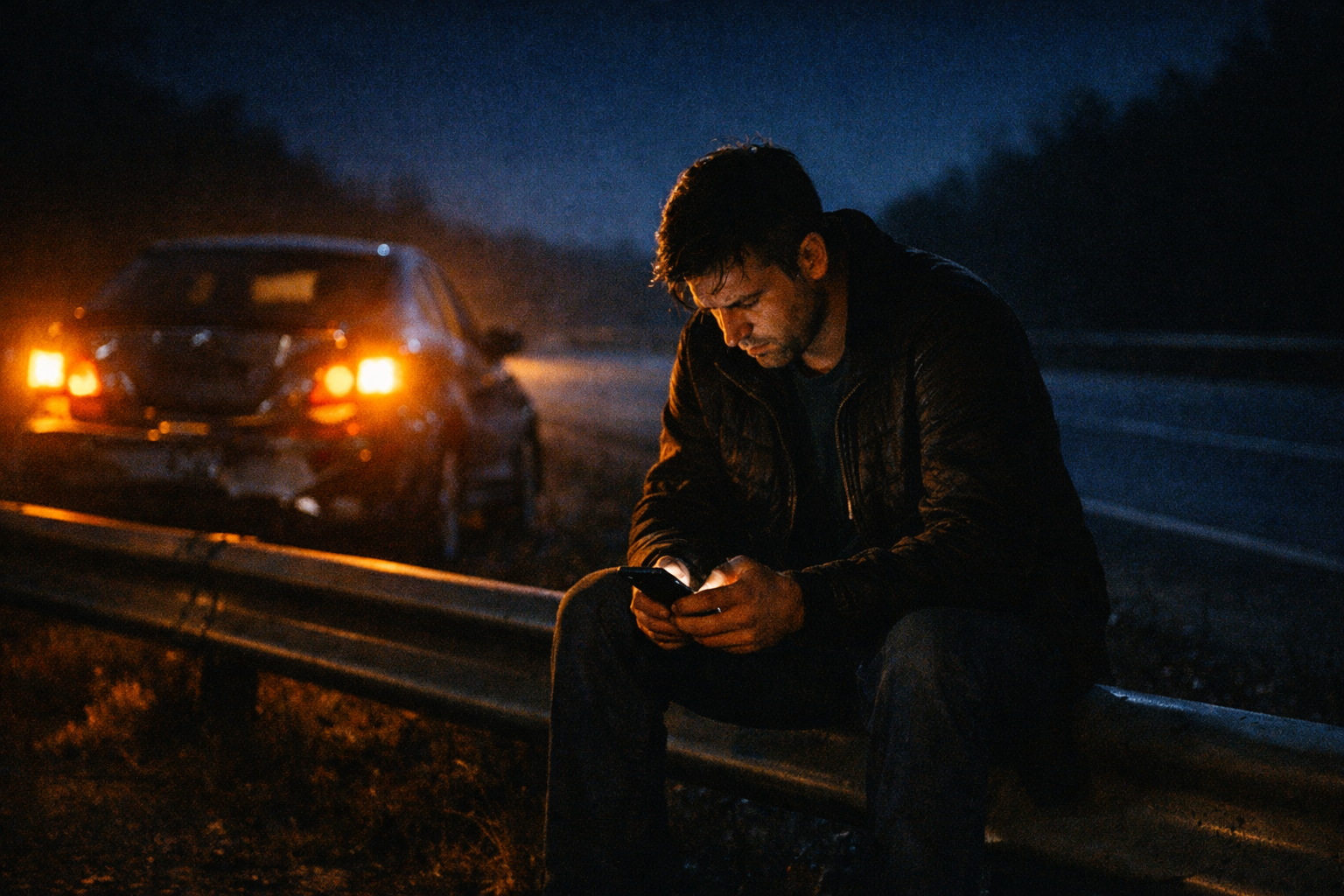
Are you written for that moment?
18,100 searches a month in Las Vegas alone. Every single one started within hours, sometimes minutes, of the worst day of someone’s life. Or three days later when they woke up and their back wasn’t right. Most PI attorney websites are written for neither of these people.
THE MARKETS
| LAS VEGAS 18,100 searches/month CPC: $47.35 Comp: 0.23 Wide open organic gap. Paid space owned by a handful of big spenders. | BUFFALO 6,600 searches/month CPC: $16.70 Comp: 0.18 Lowest competition of the three. First mover wins outright. | RICHMOND 1,000 searches/month CPC: $12.30 Comp: 0.23 Small market, zero content saturation. One good firm dominates fast. |
All three markets share the same pattern: competition scores under 0.25, organic content that is almost uniformly generic, and a searcher who is in crisis mode the moment they type those words. The attorney who publishes content built for that specific moment wins these markets before anyone else figures out what happened.
Two searchers. Two different moments. One website missing both.
WHO IS ACTUALLY DOING THAT SEARCH
SEARCHER TYPE 1: THE IMMEDIATE SEARCH
The accident just happened. She’s in a CVS parking lot on I-15 in Las Vegas. The other driver’s insurance company called 40 minutes ago. She doesn’t know she doesn’t have to talk to them.
He’s on the side of Flamingo Road at 2am. His car is his Uber income. It’s totaled. He’s searching right now, in the dark, while he waits for the tow truck.
She’s in a hospital waiting room while her father is in surgery. She doesn’t even know if she should be calling a lawyer right now. She just knows someone has to.
What they need from your content: Tell me what to do right now. In plain language. Before I make a mistake I cannot undo.
SEARCHER TYPE 2: THE DELAYED REALIZATION
The accident was days ago. He felt fine at the scene. He told the officer he was okay. He didn’t go to the hospital. He went home, went to work, tried to move on.
Now it’s Friday night. He’s on the couch. His lower back is tight in a way it wasn’t before. His neck aches when he turns left. He keeps telling himself it’s nothing.
It’s not nothing. And somewhere underneath the denial, he knows it. So he picks up his phone and searches.
What they need from your content: Tell me it’s not too late. Tell me what delayed pain means legally. Tell me I haven’t already blown my chance.
These are not the same person and they do not need the same message. The immediate searcher needs action steps and permission to act fast. The delayed searcher needs reassurance that the window hasn’t closed and that the pain they’re feeling now is legally relevant.
Most PI attorney websites speak to neither. They speak to an imaginary third person who is calm, informed, and comparison shopping. That person almost never exists.
What happens in the first 24 hours
THE TIMELINE YOUR CONTENT NEEDS TO ADDRESS
| 0–45 min | The accident happens. Adrenaline masks pain. They feel “fine.” The other driver’s insurance adjuster is already notified. Their clock starts immediately. |
| 45 min–2 hr | The insurance company calls. They ask for a recorded statement. They may offer a quick settlement. The person on the other end of that call has done this thousands of times. The accident victim has done it zero times. |
| 2–6 hr | The search begins. From the ER. From the parking lot. From the phone on the couch. They are looking for one thing: someone who can tell them what to do before they make it worse. |
| 6–24 hr | Decisions get made that can’t be undone. Statements given. Offers accepted. Medical treatment skipped because they don’t know the connection to their case. Evidence disappears. Witnesses forget. |
| Day 2–5 | The pain arrives. The neck stiffness. The lower back that wasn’t right yesterday. The headache that won’t go away. The second search happens. “Can I still file a claim if I didn’t go to the hospital?” |
| Day 6+ | They finally call an attorney. Often after making avoidable mistakes. The attorneys whose content reached them in hour two prevented all of this. |
Your content doesn’t need to cover all of this explicitly. But the attorney whose website demonstrates that they understand this timeline. They know what the insurance company is doing right now, that they know what delayed pain means, that they know the window is closing. That is the attorney who gets called before the mistakes get made.
Five ways PI content fails the person who needs it most
WHERE MOST ATTORNEYS ARE LOSING THE SEARCH
1. Written for a calm person who doesn’t exist
Most PI content reads like a brochure written for someone who is calmly comparison shopping over coffee. Nobody searching for a car accident lawyer from a hospital waiting room or a tow truck pickup is that person. The tone is wrong, the structure is wrong, the information hierarchy is wrong for the actual moment of search.
2. Leads with credentials instead of answers
The person on the side of the road does not care that you’ve recovered over $50 million in verdicts. Not yet. They care about one question: what do I do in the next hour? The attorney whose homepage answers that question in the first paragraph gets the call. Everyone else gets the bounce.
3. Never mentions the insurance company’s playbook
The other driver’s insurance company has a step-by-step process. They activate it within the first hour. Most PI attorney websites never acknowledge this reality. Content that explains what the insurance company is already doing and why speed matters and positions you as the insider ally they desperately need right now.
4. Completely misses the delayed-pain searcher
A massive segment of PI searchers felt fine at the scene and are now, days later, searching from their couch because their back hurts. They need a completely different message: it’s not too late, delayed pain is normal and legally significant, and not going to the hospital at the scene does not kill their case. No attorney content addresses this person directly.
5. Generic AI output that ranks for nothing
Google’s AI Overviews filter out content that sounds like it was written for any attorney in any city. If your Las Vegas city page could have been written for a Buffalo attorney with a find-and-replace, it’s not getting cited and it’s not converting. Voice DNA content that reflects your actual voice, your actual city, and your actual understanding of who is doing the searching is what wins.
What the content actually needs to say
GENERIC VS. VOICE DNA
| WHAT GENERIC CONTENT SAYS “Our experienced attorneys have recovered millions for accident victims.” “We offer free consultations and work on contingency.” “If you’ve been injured in a car accident, you may be entitled to compensation.” “Call us today to speak with a dedicated personal injury attorney.” | WHAT VOICE DNA CONTENT SAYS “The insurance company has already called you. Here’s what you should not say.” “You felt fine at the scene. Your back hurts now. This is extremely common and here’s why it matters.” “You have [X] days in Nevada to file. Here’s what happens to your case if you wait.” “You don’t have to have it all figured out to call. That’s what the first conversation is for.” |
The right column isn’t hypothetical. It’s what happens when a PI attorney’s actual voice, analyzed across 21 dimensions by Smart Chimp AI’s Voice DNA process, gets applied to the exact person doing that search in that city at that moment.
Google’s AI Overviews are now pulling citations from content that demonstrates genuine, specific, local knowledge. Generic content written for a national audience ranks for no one. Content that sounds like a Las Vegas attorney who actually understands what happens on I-15 at rush hour is the content that gets cited and gets the call.
| Is your content written for the person searching right now? We’ll audit your current PI content against both searcher types: the immediate search and the delayed realization search, and show you exactly where you’re losing them. No pitch. Just an honest look at what your content is doing and what it isn’t. smartchimp.ai · Request your PI content audit today |
